Louisiana is pressing ahead with its bid to place a proposed federal space academy at LSU New Orleans, even as the state prepares to lose two of its most influential positions in the U.S. House.
The proposal combines a serious aerospace résumé with a significant political challenge. New Orleans has decades of NASA manufacturing history, a large university campus and support from state, local and academic partners. But the academy does not yet exist as a fully authorized, funded institution, Louisiana has not been selected, and the next Congress will look very different from the one in which Louisiana Republicans Mike Johnson and Steve Scalise held the House’s top two leadership posts.
Louisiana Economic Development formally submitted the state’s response to NASA this month. The plan would establish the United States Space Academy alongside LSU New Orleans on the lakefront campus, with an initial class of 300 cadets in fall 2028. State officials project enrollment of 1,200 by 2031 and at least 4,000 over time.
Those numbers are Louisiana’s proposal, not an approved federal enrollment plan.
## What the academy is — and is not
The federal government currently describes the institution as a proposed NASA-led civilian academy. It is intended to train astronauts, engineers, scientists, public servants and other leaders for the nation’s civil, commercial and military space programs.
That distinction matters. Although the academy would support the broader national-security space workforce, it is not currently designed as a separate Space Force service academy comparable to West Point or the U.S. Air Force Academy.
President Donald Trump created a presidential commission on Aug. 28 to develop recommendations for establishing the academy. NASA then requested information from states interested in hosting it. According to NASA, those responses will help the commission recommend a location process, while a separate formal competition could follow.
The White House executive order also acknowledges that implementation may require legislation. The commission must address governance, curriculum, service obligations, location selection, pilot programs and a legislative strategy before NASA carries out recommendations approved by the president.
In short, Louisiana has submitted a detailed pitch at an early stage. It has not won a federal award.
## Louisiana’s case
The state’s strongest argument is proximity to an existing aerospace workforce and infrastructure.
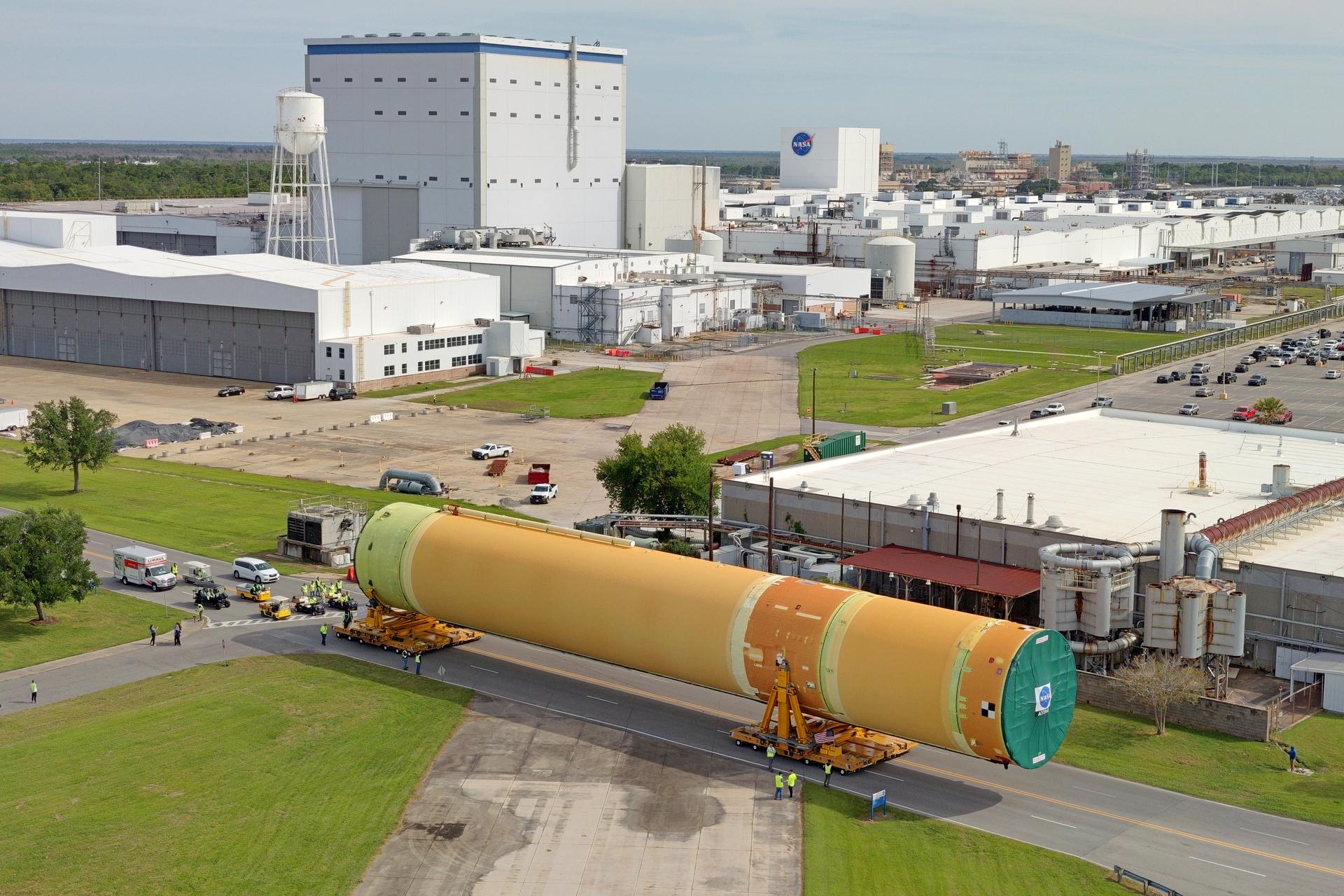
NASA’s Michoud Assembly Facility in eastern New Orleans built the first stages of the Saturn V rockets, produced the Space Shuttle’s external tanks and now assembles core stages for the Space Launch System used by the Artemis program. The LSU New Orleans campus is about nine miles away.
Louisiana Economic Development says the lakefront campus contains 2.83 million square feet of academic, residential, laboratory, athletic and research space, including more than 1,600 residence hall beds. The state proposes creating a separately governed academy precinct while continuing civilian education on the larger campus.
Southern University at New Orleans and Tulane University have offered facilities and academic support. The City of New Orleans has pledged coordination on roads, drainage and public services. State officials also emphasize nearby military facilities, research institutions and private aerospace employers across the Gulf South.
That gives Louisiana a credible technical and logistical argument. It does not make the decision automatic. The Louisiana Illuminator reported Wednesday that at least two dozen other states are competing, and federal evaluators will consider site readiness, environmental issues, partner resources and the amount of nonfederal support offered.
## The political shift
When Louisiana developed its bid, Johnson was House speaker and Scalise was majority leader. Democrats’ midterm victory will remove both from those posts in January. Johnson has said he will not seek another Republican leadership position, while Scalise lost the minority-leader contest to Ohio Rep. Jim Jordan.
Losing those offices reduces Louisiana’s direct leverage over the House agenda. It does not remove the delegation from the process.
Democratic Rep. Troy Carter, whose district includes the proposed site, has endorsed the application. Carter said the federal government should consider New Orleans’ location, research institutions and aerospace workforce. Louisiana’s entire congressional delegation supported the state submission, according to Louisiana Economic Development.
That bipartisan backing may become more important under divided government. A Republican president will receive the commission’s recommendations, but a Democratic-controlled Congress could be asked to authorize or finance major portions of the project.
This is analysis, not a prediction: Louisiana’s best strategy is likely to depend less on any one leader and more on holding together a bipartisan coalition around economic development, workforce training and national space policy.
## The unanswered cost
The largest unresolved issue is money.
Louisiana’s proposal includes LSU assets, accelerated city infrastructure work, economic-development assistance and a dedicated Louisiana U.S. Space Academy Fund intended to reduce federal startup costs. State officials have not publicly attached a dollar amount to that fund.
State Rep. Jack McFarland, the Republican who chairs the House Appropriations Committee, told the Louisiana Illuminator that he had not discussed a specific state contribution with the Landry administration.
That gap is important. A new federal academy with housing, laboratories, security, faculty and long-term operating costs would require a substantial and continuing commitment. Before lawmakers can judge Louisiana’s offer, they will need to know how much the state is expected to spend, what the federal government would cover and whether existing LSU New Orleans programs would gain or lose resources.
For now, Louisiana can fairly claim a strong site and a genuine connection to America’s space program. It cannot yet claim a campus, a federal appropriation or a final selection.
The state’s bid has survived the first political shock of the midterms. Its harder tests—cost, authorization and competition—are still ahead.