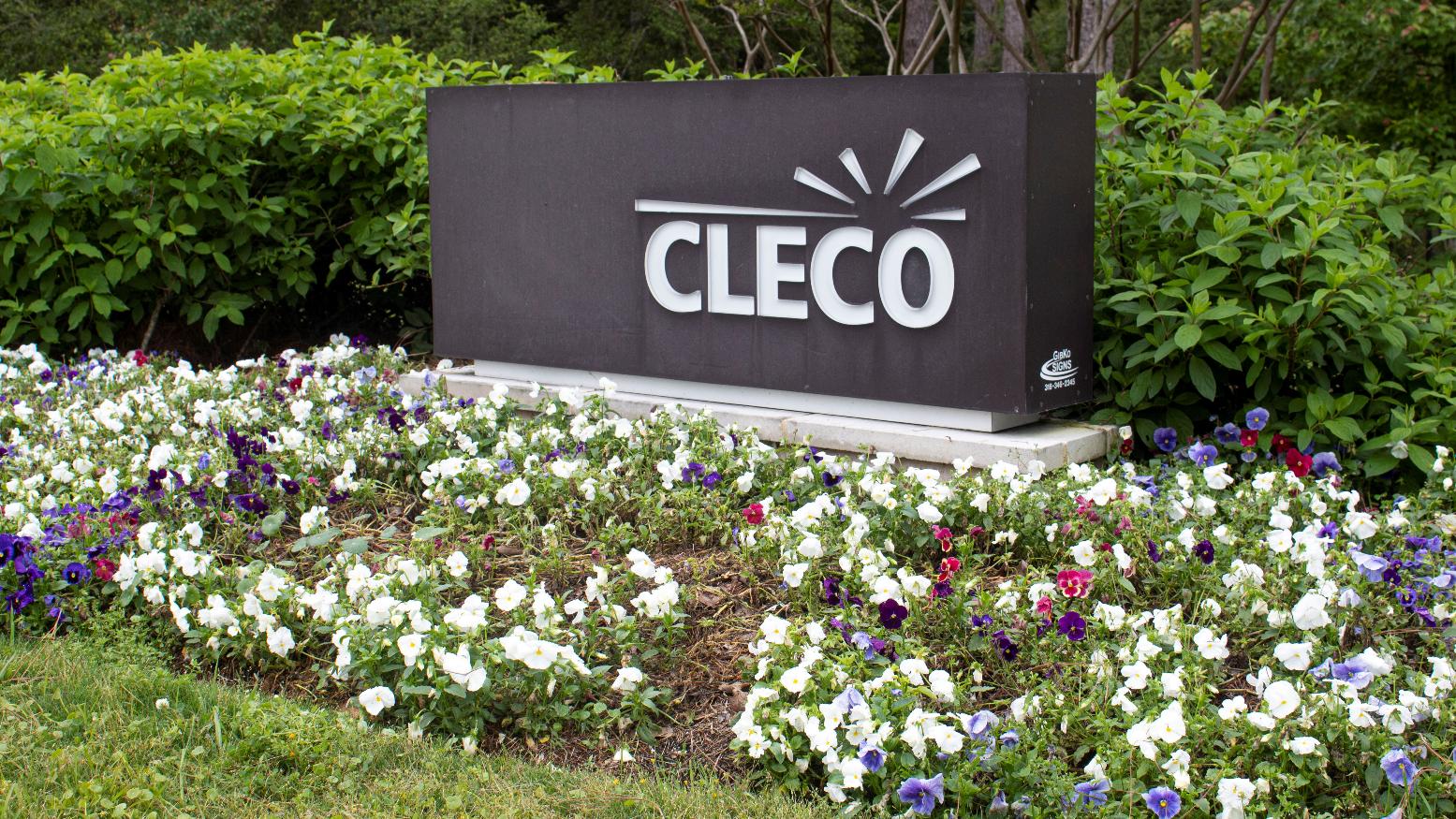
The Louisiana Public Service Commission has unanimously approved a regulatory settlement allowing the proposed sale of Cleco to move forward, attaching a broad set of conditions intended to protect customers, employees and Central Louisiana’s economy.
The Nov. 18 vote clears one of the transaction’s most important remaining hurdles. It does not mean the sale has closed.
Cleco disclosed the commission’s decision in a filing with the U.S. Securities and Exchange Commission, saying the transaction remains subject to other closing conditions. A previous company filing said the parties expected to complete the sale in December if those conditions are met.
Under the proposed transaction, infrastructure investment firm Stonepeak and Baton Rouge-based Bernhard Capital Partners would acquire Cleco Group from its current ownership consortium. Stonepeak would hold the majority interest.
Cleco is one of Louisiana’s most consequential regulated utilities. The Pineville-based company employs about 1,200 people and serves approximately 298,000 residential, commercial and industrial customers across 24 parishes, according to Cleco and the buyers’ April announcement.
That scale makes the ownership decision both an economic-development issue and a consumer-protection test.
## What the commission approved
The commission approved an uncontested settlement in docket U-37963 rather than simply giving the buyers an unrestricted change of control. Local reporting from KALB says the agreement contains more than 70 regulatory commitments.
Among the central provisions, Cleco is expected to remain locally managed and operated with its headquarters in Pineville. Its customer call center also is to remain in Central Louisiana, and the company is to maintain its statewide operating footprint.
Workforce protections cover employment, compensation and benefits. The settlement also requires continued Louisiana Public Service Commission regulation after the ownership change.
For ratepayers, one of the most important protections is that costs created by the acquisition itself cannot simply be shifted onto electric bills. Reporting on the filed settlement says Cleco is barred from recovering expenses that would not have existed without the transaction, including the acquisition premium and specified legal and financial advisory costs.
That is not the same as a rate freeze.
Cleco will continue to operate under the commission’s normal regulatory structure and may seek future rate adjustments through its existing review process. The commission would still determine whether proposed costs and rates are justified.
The distinction matters. The settlement is designed to prevent customers from paying for the purchase transaction, but it does not guarantee that electric bills will never rise because of fuel costs, storm recovery, grid investment, new generation or other expenses.
## Jobs and economic development
The agreement reflects months of concern from Central Louisiana officials that a change in ownership could move decision-making, jobs or corporate functions away from Pineville.
State Rep. Mike Johnson and Pineville officials had publicly pressed for protections. After the vote, Johnson said he was pleased the headquarters, call center and Central Louisiana jobs were protected, according to KALB.
The settlement also includes economic-development commitments within Cleco’s service territory. Reported terms call for at least $760,000 per year for five years, along with a separate $10 million contribution for qualifying economic-development projects.
Gov. Jeff Landry and Louisiana Economic Development Secretary Susan Bourgeois praised the commission’s decision in a joint statement. They argued that the agreement paired regulatory certainty for investors with protections for ratepayers and Louisiana communities.
Their statement also emphasized that Bernhard Capital Partners is based in Louisiana. That local connection is politically significant because Cleco’s current ownership includes large outside investment institutions, and state leaders have repeatedly presented the new partnership as a way to bring more Louisiana-based participation into the utility’s ownership.
The buyers, for their part, have said they intend to provide capital and infrastructure expertise while keeping Cleco rooted in Pineville. Those are forward-looking commitments, not completed results, and their performance will have to be measured after closing.
## The case for the deal—and the questions ahead
Supporters see the sale as a way to give Cleco access to new investment capital at a time when Louisiana utilities face growing demands: hurricane resilience, aging infrastructure, industrial expansion, data-center load and the need for additional generation.
The commission’s settlement attempts to capture that potential while limiting the risk that a private-equity transaction will burden customers or hollow out a major regional employer.
Skeptics of utility acquisitions often focus on a different incentive. New owners must earn a return, and utilities can seek recovery for large capital projects through regulated rates. The critical question is therefore not only who owns Cleco, but which future investments the commission approves, how those costs are allocated and whether promised reliability and economic gains materialize.
That is analysis, not a finding that the buyers will either succeed or fail.
The verified facts are narrower: The commission unanimously approved the settlement; Cleco reported the approval to federal regulators; the agreement includes protections for headquarters, employment, acquisition costs and economic-development funding; and the transaction has not yet closed.
The next phase will determine whether the regulatory bargain works as intended. Louisiana officials will need to enforce the commitments, review future rate requests independently and make the buyers demonstrate that major investments benefit the customers who ultimately fund the system.
For nearly 300,000 Cleco customers, the commission vote is not the end of the story. It is the start of a long-term test of whether new ownership can deliver more capital and stronger infrastructure without weakening local control or making ratepayers absorb the cost of the deal itself.