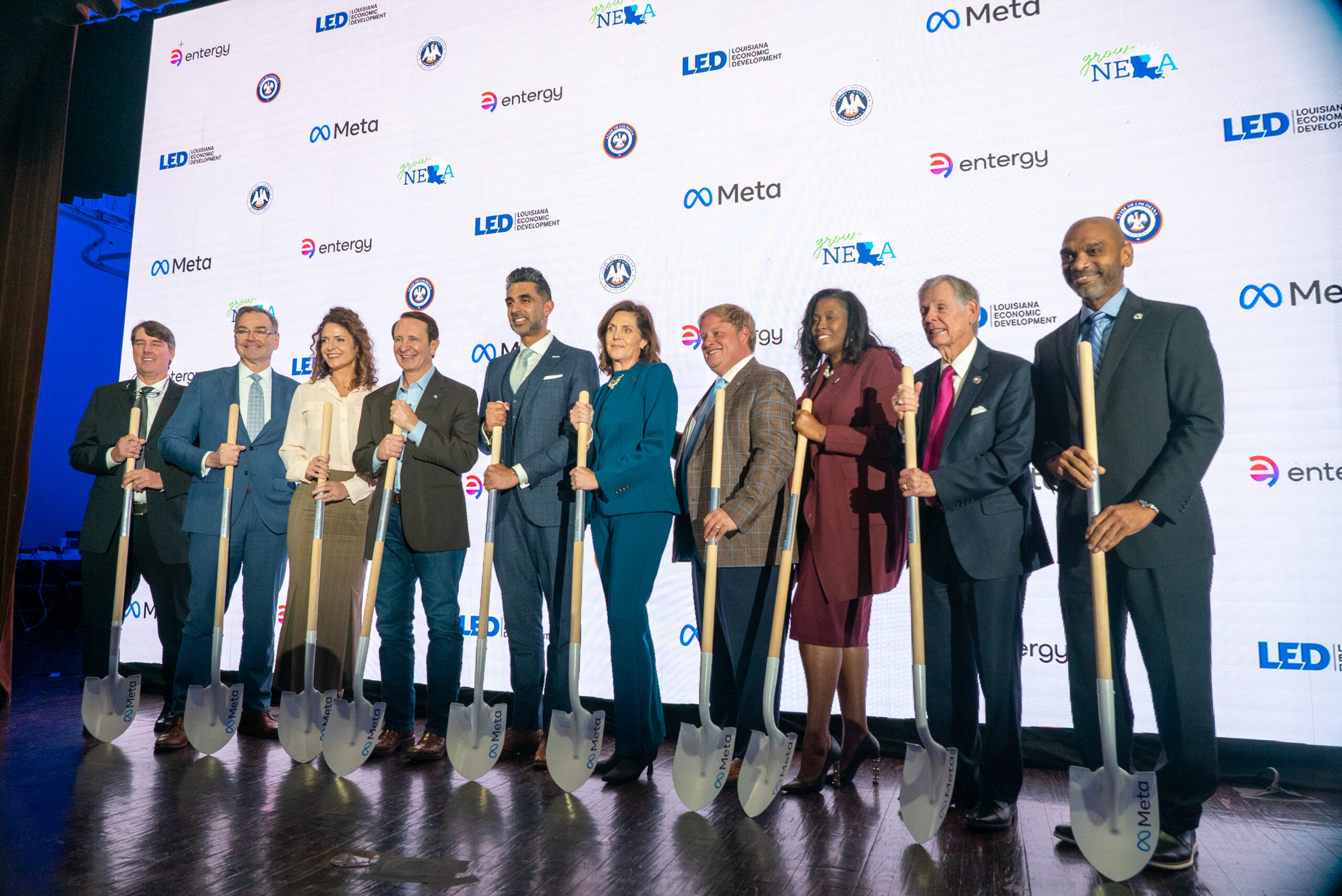
Gov. Jeff Landry wants Louisiana to stop calling large data centers “data centers” and start calling them “digital factories.”
The phrase is more than a branding exercise, but it is not a legal transformation. Louisiana’s existing sales-tax exemption still uses “data center” because that is the term written into state law. The new name instead reflects the administration’s argument that modern facilities create valuable digital products rather than merely storing information.
“What started off as a data center, which used to be where you would just store things, has now become a digital factory,” Landry said this week, according to the Louisiana Illuminator.
The governor’s description is broadly consistent with how artificial-intelligence computing works. Massive server campuses train and operate models, process cloud workloads and support applications used by businesses and consumers. They produce services rather than physical goods.
But whether “factory” is the best political description is less important than the questions Louisiana still must answer: Who pays for the electricity infrastructure? How many permanent jobs will the projects create? How much tax revenue will communities give up? And will the state enforce the commitments it is requiring from companies?
## The national language shift
Louisiana’s terminology follows a federal change.
President Donald Trump signed an executive order Sept. 29 directing executive agencies to use “Super Intelligence” and “SI” instead of “Artificial Intelligence” and “AI” in most non-statutory documents and public communications. The order retained the existing legal definition of artificial intelligence unless Congress changes it.
Louisiana Economic Development adopted “digital factories” in its own public materials in October. The agency says the term better describes facilities that power cloud computing and advanced digital services.
Neither change alters the underlying technology. The federal order explicitly leaves older regulations, contracts and statutes intact. Louisiana likewise continues to use the formal name “Data Center Sales and Use Tax Exemption” because state law has not been rewritten.
The words matter politically because data centers have become increasingly controversial. Stateline reported that voters across the country approved dozens of local measures restricting the facilities in the Nov. 3 election. Some incoming House Democrats have also called for a national moratorium on new artificial-intelligence data centers.
Louisiana is moving in the opposite direction, positioning itself as a leading destination for the projects while adding conditions to state incentives.
## The economic case
Louisiana Economic Development says projects in the state represent more than $81.6 billion in announced investment, at least 2,025 direct jobs, more than 4,000 indirect jobs and nearly 12,000 construction workers at peak activity.
Those are state and company projections. They describe commitments and expected employment, not a final count of jobs already created.
The largest project is Meta’s expanded Richland Parish campus. The company announced in July that it would increase planned investment to more than $50 billion, with about 1,000 operational jobs and 7,500 construction workers at peak.
Amazon has announced $18 billion across three planned northwest Louisiana campuses. Applied Digital is developing a $3.6 billion campus in Rapides Parish that Louisiana Economic Development says will support 200 direct jobs.
Supporters argue that the projects diversify Louisiana’s industrial base, generate construction work and place the state inside a rapidly growing technology sector. They also point to community-college partnerships, skilled-trades training and contracts for Louisiana businesses.
Critics can fairly note that permanent employment is modest compared with the enormous capital investment and energy demand. A server campus costing billions may employ fewer people after construction than a conventional manufacturing plant of similar physical scale.
Calling the facilities factories does not settle that comparison.
## Louisiana’s new conditions
Landry signed an executive order in June directing the state to develop a ratepayer and community-protection framework for large, power-intensive projects. Louisiana Economic Development completed the framework in October.
The state is converting access to the sales-tax exemption into what it describes as an invitation-only program. Companies must submit detailed attestations and receive support from Louisiana Economic Development, environmental and energy regulators, the Public Service Commission and the proposed electric provider.
The framework covers eight areas. Among them, companies must explain how new generation, transmission and infrastructure will be financed without shifting costs to existing residential and business customers. They must address water and environmental impacts, workforce development, local revenue, community investment, grid reliability and the use of Louisiana vendors.
Companies must also make measurable commitments and report progress.
Those requirements are more specific than the baseline statute, which generally requires an approved project to promise at least 50 permanent jobs and $200 million in capital investment. State law allows qualifying purchases and construction expenses to receive a sales-and-use-tax exemption, with an initial eligibility term of 20 years.
The framework appears designed to give the administration more leverage before approving that benefit. Its effectiveness will depend on the details of each agreement, the transparency of those commitments and the willingness of state agencies to enforce them.
## The ratepayer question
Electricity is the central policy concern.
Large computing campuses can require power on the scale of cities or industrial complexes. Serving them may require new generation plants, transmission lines and substations. If the customer pays those costs and remains in operation for decades, utilities and other customers could benefit from a larger system and additional revenue.
If demand projections fall short, a company leaves or infrastructure costs are spread too broadly, existing customers could face higher bills.
Louisiana’s framework says companies must demonstrate safeguards against that outcome. That is an important promise, but it is not yet proof that every contract will fully insulate ratepayers.
The same applies to water use, tax exemptions and local services. Each project has a different location, power arrangement and public-incentive package. Statewide totals can obscure those local differences.
## More than a name
Landry’s “digital factory” label captures one real change: modern data centers perform active computing and produce marketable services. The old image of a quiet warehouse filled mainly with stored files is incomplete.
The phrase also advances the administration’s political case by associating the projects with manufacturing, production and jobs at a moment when public skepticism is rising.
Both points can be true.
The balanced judgment should depend on results rather than terminology. Louisiana can claim success if the projects deliver their promised investment and employment, companies finance the infrastructure they require, communities gain sustainable revenue and residential customers are protected from added costs.
If those conditions fail, changing the name will not change the outcome.